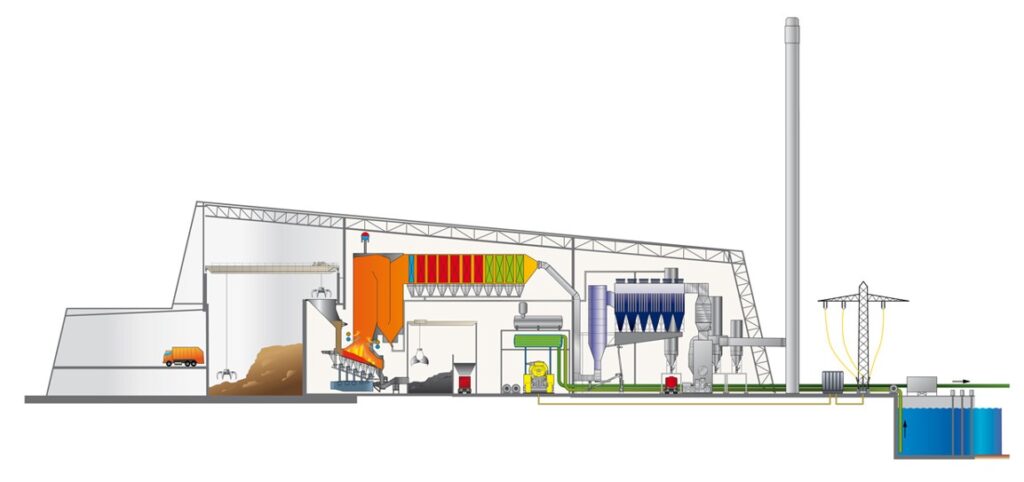
A common perception amongst the public is that Waste to Energy plants discourage recycling. Gareth Jones argues, it can be easier and more economically feasible than traditional recycling methods for some plastics.
It has been reported that the five European countries with the highest recycling rates (Germany, Austria, Sweden, Netherlands and Belgium) are amongst the countries with the most Waste to Energy (WtE) facilities in Europe. These countries use their landfills to dispose of less than 1% of the waste they generate, with the majority being productively handled by WtE plants. The environmental benefit of these facilities is on a much larger scale than many know.
To offer an insight into a debate that’s often plagued with misconceptions, as well as addressing the benefits of WtE, it is important to outline the many ways by which WtE plants operate in conjunction with recycling, working to utilise waste as a resource.
Firstly, it’s important to note that there are strong parallels between WtE plants and recycling. The myth of diminished recycling efforts can be dispensed with as evidence by showing the positive impact these plants are having. As the pair work hand in hand with one another, results are only being seen as beneficial to the environment.
It goes without saying that recycling is an incredibly positive method of dealing with waste of all kinds and we have become much better at doing it. For example, recycling a tonne of aluminium saves 14,000 kWh of electricity, and there’s no limit to the number of times you can recycle drinks cans, so the cycle is endless. As much as this is all a positive, it’s fair to state that the process isn’t perfect. The value of plastic has dropped and outlets have dried up, which has created a ripple effect across the entire recycling industry.
Financial Concerns
Despite the push for recycling, in a large number of countries there are financial concerns for many municipalities, and it appears that huge amounts of plastic are being exported to dubious landfill sites rather than being recycled. This therefore suggests that our recycling efforts alone are not enough to deal with our waste.
Most recycling centres are restricted to collecting only a few types of plastic, limiting the chance of success. As a result of these challenges, the recycling industry continues to struggle with the variety and volume of potentially recyclable waste.
For both waste disposal and waste treatment, we require a number of solutions in order to effectively keep costs down whilst remaining efficient.
While waste prevention and recycling must be at the forefront of any waste management approach, WtE plants demonstrate that recycling needn’t be our only method of material reuse. These plants help to eliminate the limitations set on recycling of complex materials and prove to work well in collaboration with recycling efforts.
WtE plants have been found to generate 500kWh of electricity per tonne of waste, highlighting their indisputable productivity levels. With the government investing heavily in the awareness and encouragement of recycling, the public has become increasingly passionate about material re-use.
However, despite everyone’s efforts, there are still materials that are not suitable for recycling found in recycling bins. WtE plants put non-recyclable materials to the best possible use. With the help of these plants, we deal with all materials in a responsible manor, ensuring that we know where the waste has gone and simultaneously producing energy.
To put things simply WtE plants are designed to extend our ability to recover and recycle. A large amount of ferrous materials can be recovered from bottom ash and the ash itself can be used as secondary aggregate, actively contributing to recycling.
There are a number of factors that can adversely affect recycling efforts, including contamination, segregation, and complex packaging materials. WtE helps provide a solution to these setbacks, helping to avoid the problems inherent in nationwide recycling systems.
Creating a More Positive Future
A common perception is that waste management plants are only there to create a solution for residual waste, whereas they should continue to engage and encourage the public to recycle too. If we are to create a more positive future for the environment and for waste management, it’s important to continue to raise awareness and help the public understand all aspects of recycling and energy generation.
WtE plants are not the smoke-pumping, landscape-ruining developments the public often associate them with. The aim is to design structures that blend in with their surroundings and provide an economic value to the surrounding communities.
None of the materials that are sent to landfills are converted into re-usable material and little energy is produced. WtE plants are able to produce energy from items that cannot be recycled so that they are sustainably recovered.
The public should be encouraged to research and ask questions so that they themselves discover what experts across the world already know; WtE is an increasingly successful industry driving positive environmental and economic growth, enhancing our aim to see waste as a resource.
Gareth Jones is Business Development Manager at Indaver and has worked in waste management for 20 years, including Indaver’s proposed waste to energy plants.
Here’s how China is going green
After years of heavy industrialization, China’s environmental challenges are nearing a tipping point.
The factories and power plants that have driven its economic growth have also polluted its air, water and soil, to the point where environmental hazards could lead to a significant risk to China’s society and economy, if not corrected in a timely manner. In a bid to tackle these challenges, China’s government has declared a “war on pollution” and introduced a number of green initiatives.
Here are the most important ones:
Less coal, cleaner air
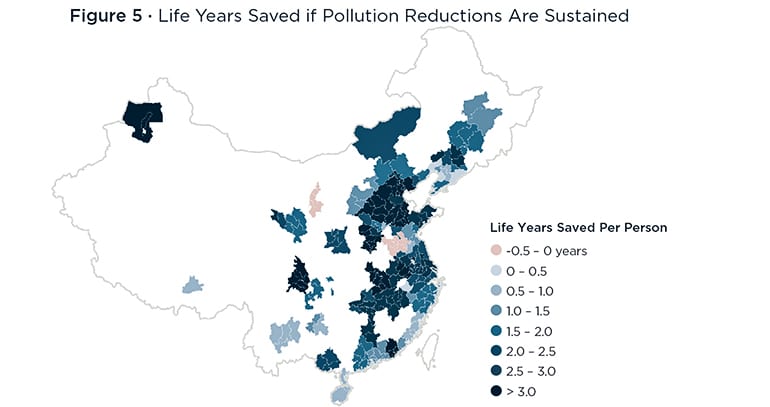
China has taken steps to dismantle coal-fired power plants, reduce overall emission levels and cut particulate-matter emission rates. Huge progress has been made on air quality, and there are now fewer smog days in China’s largest cities.
Better regulation
The former Ministry for Environmental Protection has been transformed into the Ministry of Ecology and Environment (MEE), a new entity with broader, clearer responsibilities. The new ministry will oversee all water-related policies, for example, from ocean resources management to groundwater. Previously, these were scattered among different departments. The ministry is also in charge of policies on climate change.
Funding a greener future
China needs an estimated additional RMB 40.3 trillion ($6.4 trillion) to RMB 123.4 trillion ($19.4 trillion) to finance the transition to a greener economy. It has started collecting an environment tax to help fund its environmental policies, and is also trying to attract more green investment.
China’s Belt and Road Initiative (BRI), a massive global programme aimed at improving inter-connectivity between countries, inspired by the ancient Silk Road, seeks to boost trade and economic growth in Asia and beyond. As Vice Premier Liu He said at the World Economic Forum’s Annual Meeting in Davos this year, reducing pollution is one of China’s main strategic goals as it pursues this initiative, along with preventing major financial risks and alleviating poverty.
The BRI will be backed by considerable resources. At maturity, investments in the initiative are expected to hit around $4 trillion, stemming from private sources, dedicated funds, and multilateral development banks. If aligned with sustainable development priorities, these resources have considerable potential to help advance the green agenda.
The next challenge is to improve green investment standards. Recently, China launched the Environmental Risk Management Initiative for China’s Overseas Investment. There is huge potential to “green” the Belt and Road Initiative, if Chinese financial institutions and enterprises improve the environmental risk management of their overseas investments and adopt responsible investment principles. Green bonds are a win-win for investors and developing countries, since they fund the green infrastructure projects that are so urgently needed by many of these countries.
Have you read?
- China’s clean, green buildings of the future
- How China is embracing green energy
- China’s green growth agenda
Sustainable development zones
Earlier this year, the Chinese government approved three sustainable development zones, which will implement the United Nations 2030 Sustainable Development Goals:
- Shenzhen
Shenzhen is China’s innovation engine. This zone will integrate technologies in sewage treatment, waste utilization, ecological restoration, and artificial intelligence to solve issues from resource management to pollution.
- Guilin
This zone will focus on innovations that tackle desertification, creating solutions that can be replicated by other regions facing the threat of encroaching deserts.
- Taiyuan
Targeting air and water pollution, this zone will foster innovative solutions that can be replicated by regions relying on resource extraction.
Tech companies as green innovators
China’s technology giants play a vital role in sustainable development. Tencent, Baidu and Alibaba are among the world’s top 10 internet companies. Online technology – particularly e-commerce, internet banking and social media – is accelerating the pace of change.
For example, Ant Financial, a banking subsidiary of Alibaba, is a founding partner of the Green Digital Finance Alliance. This alliance aims to use digital technology to advance green finance.
Over 200 million of Ant’s users signed up to Ant Forest, an app that gamifies carbon footprint tracking. The app prompts users to cut greenhouse gas emissions in real life, demonstrating the massive potential of Fintech for supporting sustainable development. By the end of January 2017, the approach had saved 150,000 tonnes of CO2. Written by: Sha Song, Specialist, Knowledge Networks and Sustainable Development, World Economic Forum Beijing.